

You wake up tired, even after a full night in bed. The gym feels harder than it used to. Your mood is flat, your focus is scattered, and the spark in your relationship feels dimmer than it once was.
If that sounds familiar, you are not imagining it. Testosterone — the hormone behind male energy, muscle, mood and sex drive — drifts down slowly with age, and your daily habits genuinely move it. Not by magic, and not overnight, but in ways research can measure.
This guide covers how to increase testosterone naturally: the five levers with the strongest evidence, what does not work, and when to see a doctor. Small, steady changes add up — but no food or supplement will double your levels.
Table of Contents
What Is Testosterone and Why It Matters
Testosterone is the main male sex hormone, made mostly in the testicles. It builds and keeps muscle, supports bone strength, drives sex drive, and influences mood, confidence, energy and concentration.
When levels fall, the effects creep in: less strength, more fat around the waist, poorer sleep, lower motivation, and a quieter libido. Because these changes arrive slowly, many men blame stress or age alone — and miss that their habits are part of the picture. The good news is that testosterone responds to how you live, so if you want to know how to increase testosterone naturally, fix the foundations first.
What Is a Healthy Testosterone Level?
There is no single perfect number. Healthy adult men sit in a wide range, and levels swing through the day — highest in the morning, lower by evening. That is why doctors test in the morning, and why one low reading is never enough for a diagnosis.
| Level (total testosterone) | What it usually means |
|---|---|
| About 300–1,000 ng/dL | The commonly quoted healthy adult range |
| Below about 300 ng/dL | Considered low by most clinicians — but only a diagnosis if symptoms are present too |
| Falling about 1% a year | The typical age-related decline from around age 30–40 |
The NHS notes testosterone falls steadily at about 1% a year from around age 30 to 40, and that this gradual decline is unlikely to cause problems on its own. Cleveland Clinic treats levels below 300 ng/dL as low in adults.
A slow decline is normal — it is not a failure. But if your symptoms are strong, get tested properly rather than guessing from a number you saw online.
5 Ways to Increase Testosterone Naturally
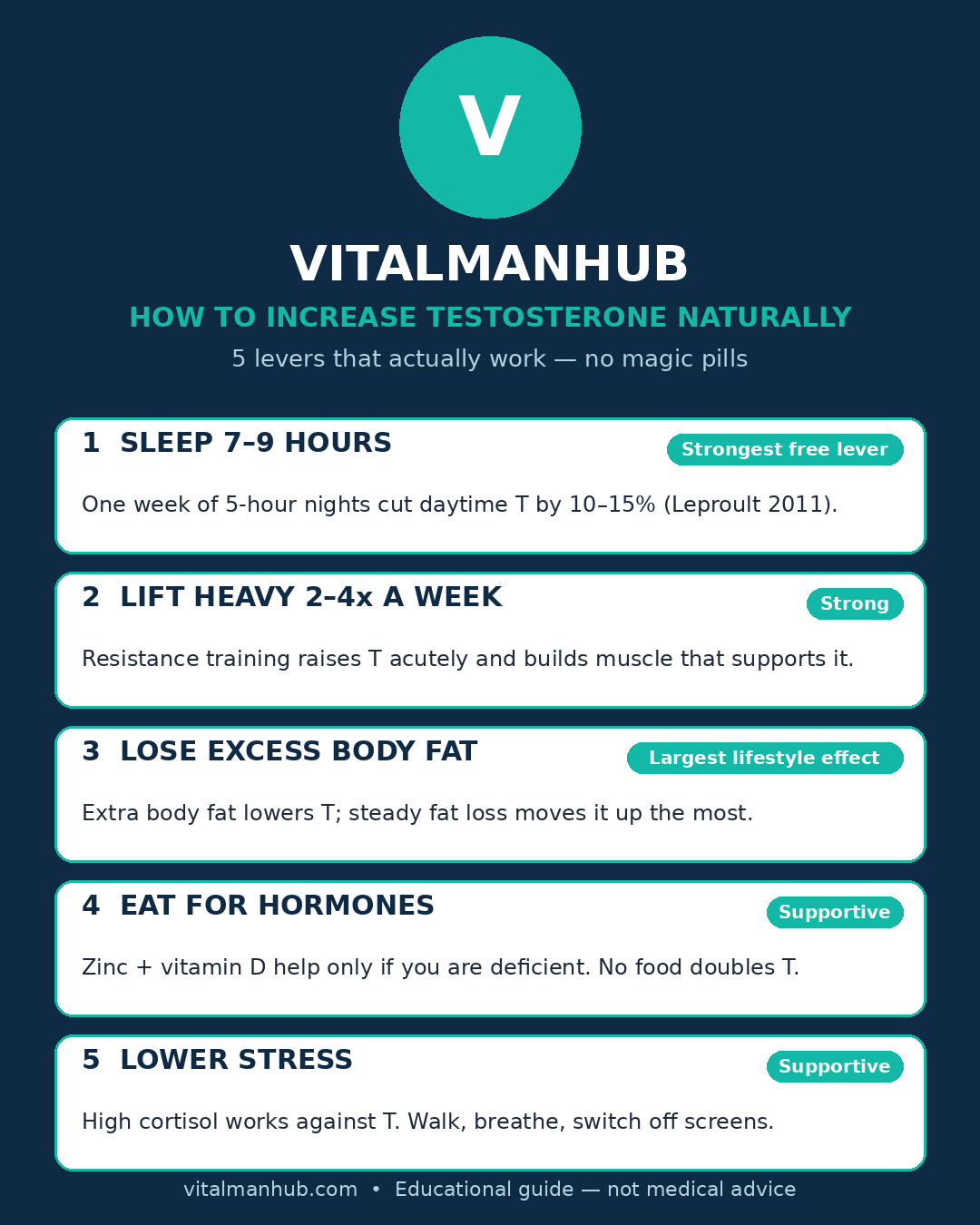
These are the five levers for how to increase testosterone naturally, ranked by how much evidence supports them. Start with the first two — they are free, and they do the most.
1. Sleep 7–9 Hours — The Strongest Free Lever
Most of your daily testosterone is made during deep sleep in the early hours of the morning. Cut sleep short, and you cut production short — which is why sleep is the first lever for how to increase testosterone naturally.
The evidence is striking. In a controlled laboratory study published in JAMA (Leproult, 2011), healthy young men who slept only five hours a night for one week saw their daytime testosterone fall by 10–15% — a bigger swing than most supplements ever achieve.
Aim for seven to nine hours at roughly the same times each night, in a cool, dark bedroom, with the phone away 30 minutes before bed. Avoid alcohol late in the evening — it fragments deep sleep. If you snore loudly or wake up gasping, talk to your doctor: sleep apnoea is a common, treatable cause of low testosterone.

2. Lift Heavy, 2–4 Times a Week
Resistance training is the most reliable exercise lever if you are wondering how to increase testosterone naturally. Lifting heavy weights — squats, deadlifts, bench press, rows — raises testosterone after a session, and over months it builds the muscle that keeps your metabolism and hormones in better shape.
Two to four sessions a week of compound lifts, with progressive overload (a little more weight or a few more reps over time), is enough. Short, intense sessions beat long, exhausting ones: overtraining raises cortisol, which works against testosterone. Daily walking, especially outdoors in daylight, supports sleep, mood and weight too.

3. Lose Excess Body Fat — The Largest Lifestyle Effect
If you carry significant extra body fat, losing it is the single biggest lifestyle change you can make for testosterone. Fat tissue converts testosterone into oestrogen, so more body fat usually means less available testosterone — and low testosterone makes fat gain easier, too.
The fix is not a crash diet. Aim for a steady calorie deficit — smaller portions, fewer sugary drinks and processed snacks, more protein and vegetables — plus the training from step two to protect muscle. Men who lose a meaningful amount of weight often see the largest testosterone rises of any lifestyle change for how to increase testosterone naturally, over months rather than days.
4. Eat for Your Hormones — Zinc and Vitamin D Matter (If You Are Low)
Food builds testosterone, but no single food is a magic booster. What matters is avoiding deficiencies and eating in a way that supports your whole system.
Zinc and vitamin D have the clearest link. Men who are genuinely deficient in zinc see their levels recover when they correct it, and low vitamin D is linked with lower testosterone. But if your levels are already normal, extra zinc or vitamin D will not push testosterone higher — it only fills a gap.
Good sources include oysters, red meat and pumpkin seeds for zinc, and oily fish, eggs and sunlight for vitamin D. Supplements are for filling a proven gap, not for chasing a number.

5. Lower Stress — Cortisol Is Testosterone’s Rival
When you are working on how to increase testosterone naturally, remember that stress and testosterone pull in opposite directions. When cortisol stays high for weeks, testosterone tends to sit lower — one reason a hard month at work can flatten your energy and sex drive at the same time.
Give your body recovery windows: a daily walk, time with your partner without phones, breathing exercises, and a regular wind-down routine. Closeness and touch lower stress in a way no supplement can match — and a calmer, closer life supports the very hormone that supports desire.
What Does Not Work (Myths to Skip)
The internet is full of shortcuts for how to increase testosterone naturally. Most waste your money — or, worse, your health.
- “Testosterone-boosting” foods that promise huge gains. No food doubles testosterone. Oysters, eggs and nuts are healthy, but their effect is modest.
- Ice baths, raw eggs and extreme routines. No human evidence that these raise testosterone meaningfully, despite viral clips.
- Unregulated “testosterone boosters.” Some contain hidden steroid-like ingredients, and the US FDA has warned about them. Dramatic results with no side effects is a red flag.
- More is not better. Megadoses of zinc can cause nausea and copper deficiency. High-dose supplements without a deficiency are a risk, not a shortcut.
If something sounds too good to be true, it almost certainly is.
When Natural Is Not Enough — Get Tested
Natural methods work for most men, but not for everyone. If you have persistent symptoms — very low energy, loss of sex drive, erection problems, low mood, or muscle loss despite training — get a proper test.
A doctor will usually order a morning blood test for total testosterone, repeated on a different day to confirm. Testosterone therapy is for confirmed, symptomatic low testosterone — not for healthy men who simply want higher numbers. The large TRAVERSE trial in 2023 (5,246 men, New England Journal of Medicine) and the FDA’s February 2025 labelling update changed how doctors talk about the cardiovascular risks of prescription testosterone, but therapy still starts with a diagnosis, not a guess.
For the full picture, including testing, see our overview of how to increase testosterone.
A Simple 4-Week Plan to Start Today
Do not change everything at once when you start working on how to increase testosterone naturally. Layer one habit each week.
| Week | Focus | Daily habit |
|---|---|---|
| Week 1 | Sleep | In bed by the same time, 7–9 hours, phone out of the bedroom |
| Week 2 | Training | Two full-body strength sessions, plus a 30-minute walk daily |
| Week 3 | Food | Protein at every meal, zinc-rich foods 3x a week, cut sugary drinks |
| Week 4 | Stress | 10 minutes of quiet time daily, one phone-free evening with your partner |
After four weeks you will feel the difference in energy, sleep and mood. Keep going for three months, then consider a morning blood test if symptoms persist.
Conclusion
Learning how to increase testosterone naturally is not about one secret trick. It is about giving your body the conditions it needs: sleep deeply, lift heavy, carry less fat, eat well, and live a little calmer.
Start with sleep tonight. Add training this week. The numbers follow the habits — and so does the way you feel, in the gym, at work, and at home with the person you love.
Frequently Asked Questions
How can I increase testosterone naturally?
Sleep 7–9 hours, lift weights 2–4 times a week, lose excess body fat, correct any zinc or vitamin D deficiency, and keep stress down. These five levers have the strongest evidence, and they work together.
How fast does testosterone increase naturally?
When you follow the steps for how to increase testosterone naturally, expect weeks to months, not days. Sleep improves within a week or two; training and fat loss take 8–12 weeks to show clearly. A blood test after about three months of consistent habits is a fair check.
Does sleep really affect testosterone?
Yes — it is the strongest free lever. In a controlled study, one week of five-hour nights cut daytime testosterone by 10–15% in healthy young men (Leproult, 2011, JAMA).
What foods increase testosterone?
No food doubles testosterone, but zinc-rich foods (oysters, red meat, pumpkin seeds), oily fish, eggs and vegetables support healthy production by preventing deficiencies. A balanced diet matters more than any single “superfood”.
Do testosterone boosters work?
Some ingredients have modest evidence, mainly when you are deficient — zinc and vitamin D are the clearest examples. Most blends have weak or mixed evidence, and unregulated products can contain hidden ingredients.
When should I see a doctor about low testosterone?
See a doctor if symptoms persist for weeks — very low energy, low sex drive, erection problems, low mood, or muscle loss despite training. A morning blood test, repeated to confirm, is the only reliable way to know.
This article is for general educational purposes only and is not medical advice. It does not diagnose, treat, cure or prevent any disease. Testosterone levels vary between individuals and over the day, and symptoms of low testosterone can have many causes. Talk to your doctor or another qualified healthcare professional before changing your diet, starting supplements, or beginning a new exercise programme — especially if you have a medical condition, take medication, or have been told you have low testosterone. If you are considering testosterone therapy, it should only be started after proper testing and diagnosis by a clinician. If you experience chest pain, severe breathlessness or any sudden serious symptom, seek urgent medical care.
For more guides on men’s vitality, visit VitalManHub.
Pingback: How to Increase Testosterone: Complete Guide
Pingback: Best Testosterone Booster for Men (2026)
Pingback: Best Supplements for Men: What Is Worth Taking
Pingback: Best Ashwagandha for Men: How to Choose