
Table of Contents
Introduction
If you are over 50 and searching for the best testosterone booster for men over 50, you are probably feeling something real: less energy, weaker in the gym, softer around the middle, and a sex drive that is not what it was. It is tempting to blame one number and buy one bottle to fix it.
At this age, that shortcut is the wrong place to start. Testosterone does fall with age — but slowly, and often not enough to explain how you feel. The honest answer for men over 50 is different from the answer for a 30-year-old: test first, fix the things that actually move the number at this age, and only then judge whether the best testosterone booster for men over 50 — or treatment — has any role at all. This guide explains what the evidence says, in that order.
What Actually Changes After 50
Testosterone declines by about 1% a year from around age 30 to 40, according to the NHS. By 50, that slow drift adds up — but on its own it is unlikely to cause problems. Two other things change with age and matter more than the headline number.
First, sex hormone binding globulin (SHBG) — the protein that carries testosterone in the blood — tends to rise with age. Most testosterone travels bound to SHBG and albumin, and only the small unbound fraction, free testosterone, is available for your tissues to use. So free testosterone can fall faster than total testosterone after 50, even when the total looks borderline normal. That is why a single total number never tells the whole story at this age.
Second, the conditions that push testosterone down become more common after 50: extra weight around the middle, type 2 diabetes, poor sleep and untreated sleep apnoea, heavy alcohol use, and some medicines. Being overweight roughly doubles the odds of low testosterone, and type 2 diabetes does much the same. In other words, for many men over 50 the low number is a signal of something else — not a hormone problem that started on its own.
The Symptoms That Matter — and the Ones That Usually Don’t
The symptoms most specifically linked to low testosterone are sexual: reduced desire, fewer spontaneous morning erections, and erectile difficulties. Those three clustered most reliably with low levels in the large European Male Ageing Study of 3,369 men aged 40-79. And here is the number that should steady you: in that study, 17% of men had a low reading on one test, but only 2.1% had the full condition — low testosterone plus symptoms.
The other signs are real but far less specific: persistent tiredness, low mood, irritability, poor concentration, loss of muscle, more belly fat, and difficulty sleeping. The NHS is clear — in many cases these symptoms have nothing to do with hormones at all, and come instead from stress, depression, anxiety, poor sleep, a poor diet, or lack of exercise. After 50, that list grows: thyroid problems, low iron, vitamin B12 deficiency, diabetes, heart disease and some medicines can all copy the same picture.
That is why symptoms alone are never enough for a diagnosis at this age, and why a number alone is never enough either. You need both, properly measured — and you need the other causes checked too.
| Symptom | How specific is it to low testosterone? |
|---|---|
| Reduced sex drive, fewer morning erections, erectile difficulties | Most specific — the three that clustered with low levels in the European Male Ageing Study |
| Tiredness, low mood, poor concentration | Common, but often caused by stress, poor sleep, depression or other illness |
| Loss of muscle, more belly fat | Real, but also driven by inactivity, diet and age itself |
| Poor sleep | Both a cause and a symptom — sleep apnoea is common after 50 and pushes testosterone down |
How Testing Works After 50
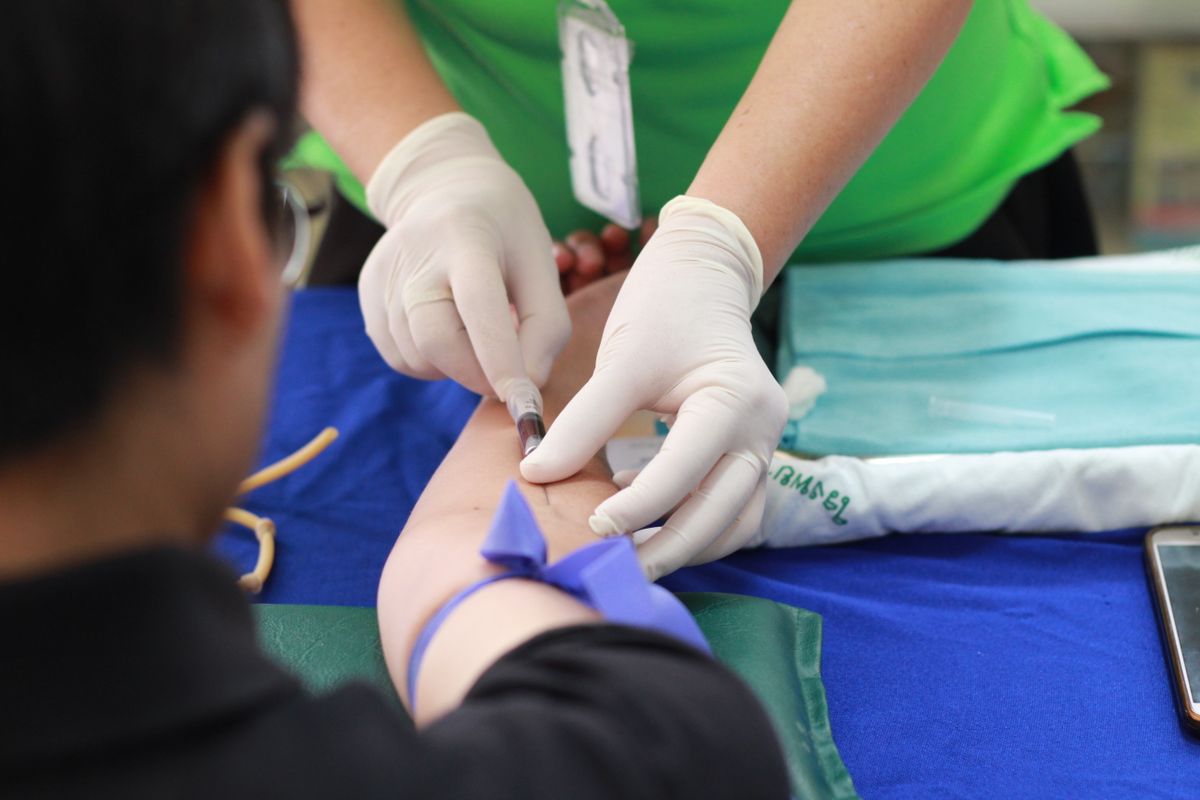
If your symptoms persist for weeks, the right first step is a blood test — not a supplement. UK guidance is specific about how it should be done, and the details matter more after 50.
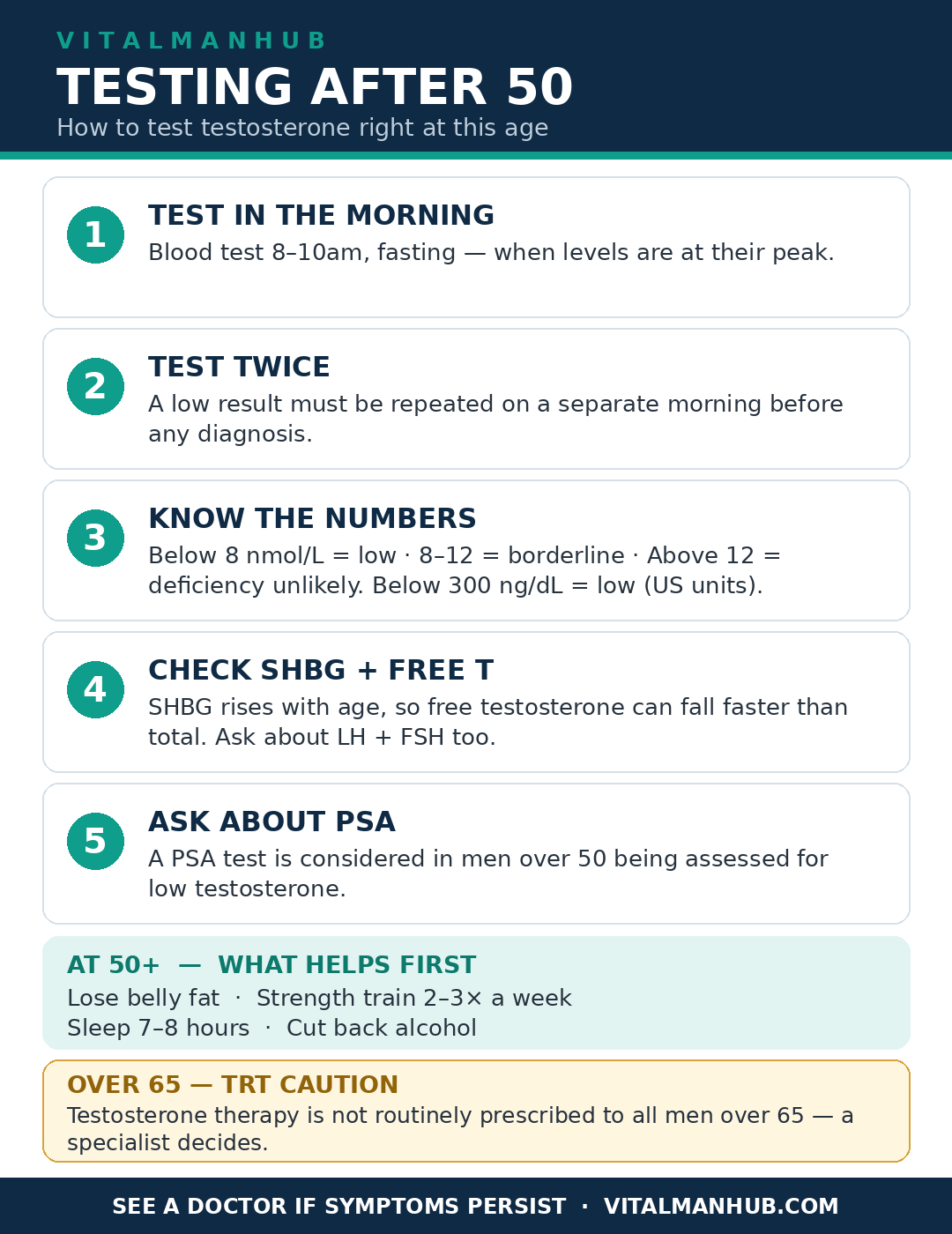
The blood sample should be taken in the morning, ideally between 8 and 10am, when levels are at their peak, and ideally after fasting. A low result must be repeated on a separate morning before anyone calls it a diagnosis, because levels move day to day and fall when you are ill.
What the numbers mean, in the thresholds UK guidance uses: below 8 nmol/L is consistent with low testosterone; 8 to 12 nmol/L is borderline and may need a trial of treatment decided with a specialist; above 12 nmol/L means testosterone deficiency is unlikely to be the cause of your symptoms. In US units, below 300 ng/dL is generally considered low (Cleveland Clinic). If the result is borderline, your clinician may also measure SHBG and calculate free testosterone, and check LH and FSH to work out whether the problem sits in the testicles or in the brain signals that control them.
One test that is specific to this age group: prostate-specific antigen (PSA). UK guidance says to consider a PSA test in men over 50 being assessed for low testosterone, because testosterone treatment is not started without knowing the prostate position. Your doctor will also check your red blood cell count (haematocrit), cholesterol and blood pressure before any treatment is considered.
What Actually Helps at 50+ (Before Any Booster)
No pill — including the best testosterone booster for men over 50 — beats the levers that move testosterone most at this age. They are unglamorous, and they work.
Lose the belly fat. Fat tissue converts testosterone into oestrogen, so more body fat usually means less available testosterone — and losing weight can raise levels. This is the single most powerful natural step for most men over 50, especially with type 2 diabetes or a large waist.
Train with resistance. Strength training two to three times a week protects the muscle that age and low testosterone both erode. It will not double your testosterone, but it defends strength, bone and mood whether or not the number moves much.
Fix the sleep. Most daily testosterone is made during deep sleep. In a controlled study, one week of five-hour nights cut daytime testosterone by 10-15% in healthy young men (Leproult, 2011) — and after 50, untreated sleep apnoea is one of the most common hidden causes of a low reading. If you snore heavily and wake unrefreshed, that deserves a check before any supplement.
Cut back alcohol, and check your medicines. Heavy alcohol use suppresses production over time, and some medicines lower testosterone as a side effect — including opioids, oral steroids, and some antipsychotics and anticonvulsants. Never stop a prescribed medicine on your own; ask your doctor whether it could be contributing.
Correct a real deficiency. Zinc and vitamin D only help testosterone when you are actually deficient in them — zinc restriction cut serum testosterone and 30 mg a day restored it in deficient men, and the vitamin D evidence is mixed (one small positive trial, one negative trial, and a meta-analysis that did not settle it). A blood test can tell you whether you are deficient; guessing cannot.
Best Testosterone Booster for Men Over 50: The Honest Verdict
Here is where this article can say something the general guides cannot: the strongest trial of the most talked-about ingredient was actually done in men your age.
Tongkat ali (Eurycoma longifolia) has one trial that stands out — Chinnappan and colleagues, 2021: 105 men aged 50 to 70 with low testosterone took 200 mg a day of the Physta extract for 12 weeks. Total testosterone rose from about 200 to about 225 ng/dL — a real rise, but still below the 300 ng/dL level generally considered low, and free testosterone was no different from placebo. The trials were maker-funded, and Europe’s food safety authority (EFSA, 2021) found its safety not established. So the honest verdict is: modest rise, still low, not a fix — and buy only from a brand that states its dose and has third-party testing, because unregulated products can contain hidden ingredients.
Ashwagandha is the next best-studied. In stressed men, trials found rises of around 15% (Wankhede 2015, +15.3%; Lopresti 2019, +14.7%), thought to work through lower cortisol. But those trials were mostly in younger men, so the over-50 evidence is indirect — promising for stress and sleep, not proven as a testosterone fix at this age.
Maca has mixed evidence for libido and none that is convincing for raising testosterone itself. D-aspartic acid, fenugreek and tribulus have weak or inconsistent evidence, and tribulus has no reliable testosterone rise at all. No ingredient replaces the levers above, and no booster replaces treatment when treatment is genuinely needed.
| Ingredient | What the evidence says for men over 50 |
|---|---|
| Tongkat ali | Best trial was in men 50-70: ~200 to ~225 ng/dL in 12 weeks, still below 300; free T no different from placebo |
| Ashwagandha | ~15% rise in stressed (mostly younger) men; over-50 evidence is indirect |
| Zinc / vitamin D | Help only if you are deficient — test first, don’t guess |
| Maca, D-aspartic acid, fenugreek, tribulus | Weak, mixed or no reliable testosterone rise |
| “Proprietary blends” with no doses | Avoid — you cannot judge what you cannot see |
Testosterone Therapy After 50: Who It’s For — and the Over-65 Caution
Testosterone replacement therapy (TRT) is a real medical treatment for confirmed low testosterone with symptoms — it is not an anti-ageing treatment, and UK guidance is explicit that it is not indicated for fatigue, erectile dysfunction or low desire when there is no hormone deficiency. It is only considered when two morning tests confirm low levels and symptoms are present, and it is started and monitored by a clinician.
Two age-specific cautions matter. First, TRT suppresses sperm production and your body’s own testosterone, so it is not for men who want children. Second, there is limited experience on the safety and efficacy of testosterone use in patients over 65, and guidance says it is not recommended to routinely prescribe testosterone therapy to all men once they reach 65 with low total testosterone. That does not mean no man over 65 can be treated — it means the decision is individual, specialist-led, and weighed against prostate and cardiovascular health, with regular monitoring of haematocrit, PSA and lipids.
Never buy testosterone online. It is a prescription-only, controlled medicine, and self-treating is risky — the dose, the monitoring and the prostate checks are the treatment, not just the hormone.
Your Next Steps
| Step | When |
|---|---|
| Book a morning blood test (8-10am, fasting), and ask about PSA, LH/FSH and SHBG if the result is low or borderline | This week |
| Repeat a low result on a separate morning before any decision | As advised by your doctor |
| Start the three levers: strength training 2-3 times a week, sleep 7-8 hours, cut alcohol and start on belly fat | This week — don’t wait for the result |
| Check for sleep apnoea if you snore heavily or wake unrefreshed | With your doctor |
| Only then judge a supplement — and only a single ingredient, at a stated dose, with third-party testing | After testing |
| If two tests confirm low testosterone with symptoms, discuss TRT with your doctor or an endocrinologist | After testing |
The best testosterone booster for men over 50 is rarely a bottle. It is a morning blood test that tells you the truth, a few months of the habits that actually move the number, and — only if the tests say so — treatment decided with a doctor, not a shopping cart.
Frequently Asked Questions
What is the best testosterone booster for men over 50?
There is no single best booster. The honest answer depends on your blood test: if you are deficient in zinc or vitamin D, correcting that helps; tongkat ali showed a modest rise in a trial of men aged 50-70 but left levels still low; ashwagandha’s ~15% rises were mostly in younger, stressed men. No supplement replaces weight loss, sleep and strength training — or treatment when two tests confirm low testosterone.
What is a normal testosterone level for a man over 50?
There is no single “normal for 50” number — levels fall slowly with age and vary between men. UK guidance treats below 8 nmol/L as low, 8-12 nmol/L as borderline, and above 12 nmol/L as unlikely to be deficiency. In US units, below 300 ng/dL is generally considered low. Symptoms matter as much as the number.
How do I test my testosterone after 50?
A blood test in the morning, ideally 8-10am and fasting, repeated on a separate morning if the first result is low. Your doctor may also check SHBG and free testosterone, LH and FSH, and a PSA test is considered in men over 50.
Can I raise testosterone naturally after 50?
Yes, to a degree. Losing belly fat, strength training, fixing sleep (including sleep apnoea) and cutting back alcohol are the levers with the best evidence. They may not return levels to age 30, but they improve energy, strength and health whether or not the number moves much.
Is testosterone therapy safe after 50?
It is a real treatment with real monitoring, not a casual supplement. It is considered only for confirmed low testosterone with symptoms, and there is limited experience in men over 65 — guidance says it should not be routinely prescribed to all men over 65 with a low reading. Prostate, red blood cell count and heart health are monitored. Never buy it online.
Do testosterone boosters work after 50?
Only modestly, and only in the right situation. The best-studied ingredient, tongkat ali, raised total testosterone from about 200 to about 225 ng/dL in men aged 50-70 over 12 weeks — still below the level generally considered low. Most other ingredients have weak or mixed evidence. A booster cannot replace testing, lifestyle change, or treatment when treatment is needed.
Medical disclaimer
This article is for general educational purposes only and is not medical advice. It does not diagnose, treat, cure or prevent any disease. Testosterone levels vary between individuals and over the day, and symptoms of low testosterone can have many causes. Talk to your doctor or another qualified healthcare professional before changing your diet, starting supplements, or beginning a new exercise programme — especially if you have a medical condition, take medication, or have been told you have low testosterone. If you are considering testosterone therapy, it should only be started after proper testing and diagnosis by a clinician. If you experience chest pain, severe breathlessness or any sudden serious symptom, seek urgent medical care.
For more guides on men’s vitality, visit VitalManHub.
Pingback: How to Increase Testosterone After 40